
How to Choose the Best Lash Extension Certification Course

A lash certificate can look impressive on a wall, but the best lash extension certification course should prepare you for the moment a real client sits down, closes her eyes, and trusts you with her natural lashes. That means more than learning a placement pattern. It means developing safe habits, consistent styling judgment, retention knowledge, and the confidence to create polished work across different eye shapes and lash conditions.
For aspiring artists, choosing training is one of the first business decisions that shapes everything after it: your service quality, speed, pricing confidence, client retention, and professional reputation. A course should give you a clear technical foundation while helping you understand what refined, customized lash artistry looks like in practice.
What Makes the Best Lash Extension Certification Course?
The right program is not necessarily the longest, the least expensive, or the one with the biggest starter kit. It is the course that combines current theory with supervised application, strong sanitation standards, and direct feedback from an educator whose work you respect.
Lash extensions are a detailed service performed around the eye area. A quality certification course should teach isolation, adhesive control, proper extension selection, styling, safe removal, and client aftercare with equal seriousness. Beautiful fans or a dark lash line are only part of the result. Healthy natural lashes and a comfortable client experience matter just as much.
Look for education that explains why a technique is used, not only how to copy it. When you understand lash direction, weight distribution, humidity, adhesive behavior, and natural lash growth cycles, you can adapt your work instead of relying on a single map for every client.
A Curriculum That Builds Skills in the Right Order
Foundational training should begin with sanitation, workstation preparation, contraindications, consultations, and natural lash health. These areas may not feel as glamorous as creating a full volume set, but they protect both your clients and your future business.
From there, a thoughtful curriculum progresses through classic application before introducing hybrid and volume techniques. Classic lashes teach precision: one properly selected extension placed on one isolated natural lash. That control becomes essential when you move into handmade fans, where balance, placement, and weight selection determine whether a set looks airy and refined or heavy and inconsistent.
An advanced course may include volume and mega-volume styling, wispy sets, textured mapping, brown lashes, wet sets, and retention troubleshooting. These options are valuable for artists who already have a stable foundation. If you are brand new, however, do not mistake an oversized curriculum for better education. It is more beneficial to leave with confident core skills than a rushed introduction to every trend.
Look for Hands-On Lash Extension Certification Training
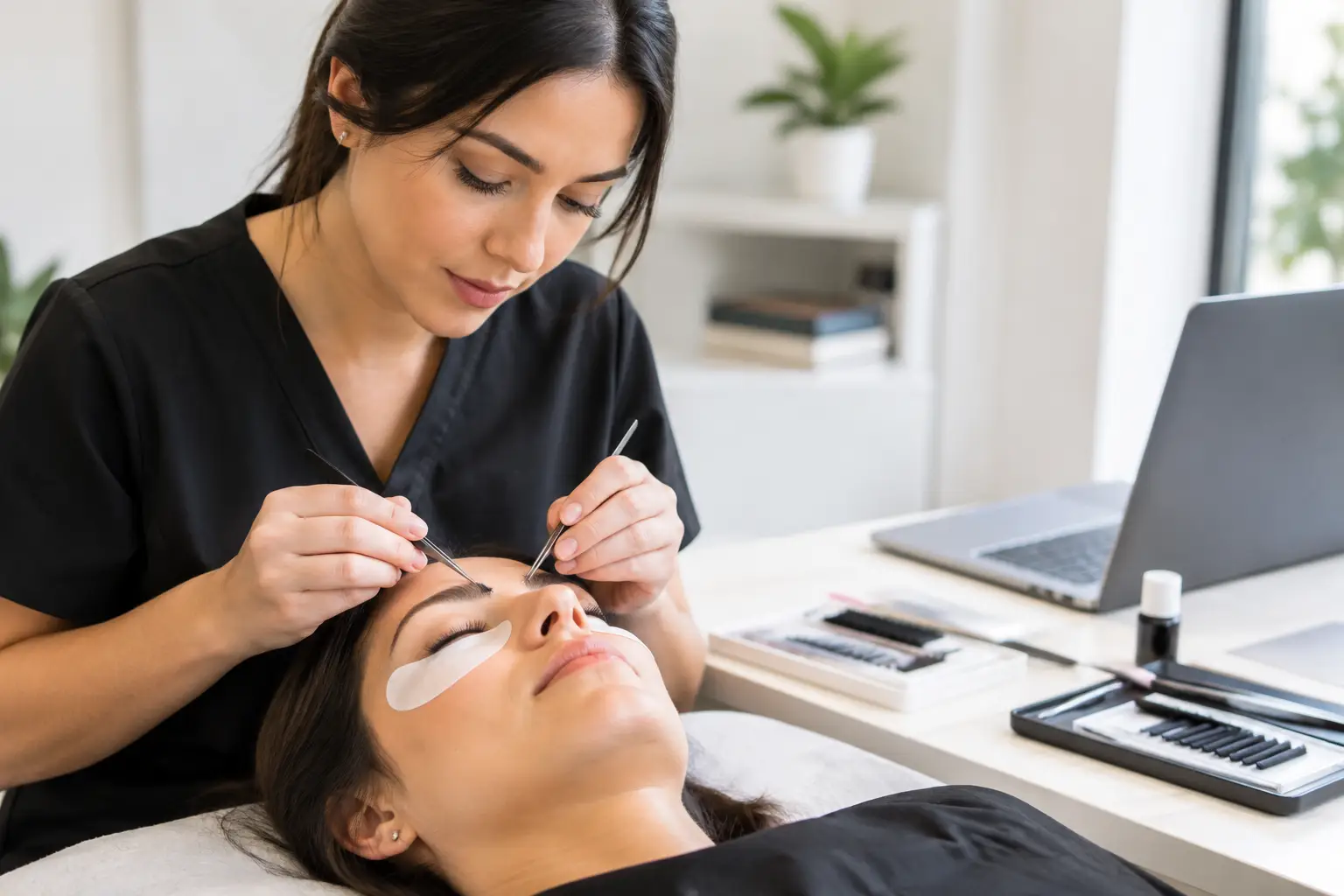
Watching a demonstration is helpful. Applying lashes under the guidance of an experienced educator is where technique becomes dependable. The most effective programs allow adequate time to practice on a live model, receive corrections, and ask specific questions while you work.
Feedback should be detailed. An educator should be able to identify whether your issue is poor isolation, too much adhesive, incorrect attachment, inconsistent direction, or a mismatch between extension weight and the client’s natural lashes. General encouragement has its place, but practical correction is what improves retention and protects lash health.
Ask how much model work is included and whether your educator is present throughout the service. Also ask about class size. A smaller group can mean more personalized guidance, particularly when you are learning delicate skills such as creating narrow handmade fans or working through inner and outer corners safely.
Practice after class is equally important. Certification marks the completion of a course, not the end of your development. Choose training that gives you structured practice expectations, reference materials, and a clear path for refining your work after graduation.
Check the Educator’s Credentials and Real-World Experience
In an unregulated beauty education landscape, credentials deserve a closer look. A certified educator should have a professional background that supports the techniques they teach, along with a visible commitment to ongoing education.
Competition experience and judging credentials can be meaningful indicators of technical standards. A competition judge reviews details that clients may not consciously notice but absolutely feel in the final result: clean isolation, consistent attachment, balanced styling, fan quality, direction, and overall finish. This perspective can be especially valuable for artists who want to create work that stands out in a premium market.
Still, awards alone should not make the decision for you. Consider whether the educator can teach clearly, answer questions without rushing, and explain how to work with real clients rather than idealized model lashes. The strongest instructors pair high-level artistry with patient, practical coaching.
At Luscious Beauty, training is informed by advanced lash artistry, professional certification, and the standards of an international competition judge. That combination supports artists who want to build precise technique while developing a service experience clients can trust.
Compare the Kit, Support, and Business Education
A starter kit should contain professional-quality essentials that match what you learn in class. It is helpful when a course explains why each item was selected, from tweezers and adhesive to lash trays, eye pads, cleansing products, and fan-making tools. A kit is a starting point, not a reason to choose a course, but poor-quality supplies can make learning unnecessarily difficult.
Post-course support can carry even more value. In the first few months, you will likely encounter questions about retention, adhesive conditions, styling adjustments, fills, and client communication. Ask whether graduates can access ongoing mentorship, refresher opportunities, student groups, or advanced classes.
Business training is also worth considering, particularly if you plan to work independently. A good course may cover consultation forms, informed consent, policies, pricing basics, appointment timing, photography, aftercare, and how to set realistic client expectations. You do not need to have every business detail figured out before enrolling, but you should understand that technical skill and professional systems grow together.
Choose a Course That Matches Your Career Stage
The best course for a beginner may not be the best choice for an established artist. A new lash artist needs strong fundamentals, model practice, and enough time to understand safe application. An experienced classic artist may benefit more from a focused volume course that improves handmade fan consistency, customized mapping, and advanced styling.
Before enrolling, be honest about where you are now. If your classic sets are not yet clean or your retention is inconsistent, advanced volume education may be premature. Strengthening the basics will make later training more rewarding and prevent frustration.
If you already have a dependable foundation, choose education that moves your work forward. Look for advanced instruction that addresses styling for hooded eyes, downturned eyes, mature clients, sparse natural lashes, and clients who want texture without excessive weight. Premium lash services are never one-size-fits-all.
Questions to Ask Before You Enroll
A course provider should be comfortable answering direct questions. Ask whether the certificate is issued after attendance, demonstrated competency, or both. Find out how many hours are dedicated to theory, mannequin practice, and live-model application. Clarify what is included in the kit, what supplies you will need later, and whether you can ask for help after class.
You should also ask about prerequisites for advanced training, class size, sanitation instruction, and whether the course teaches safe removal and contraindications. If answers feel vague, rushed, or overly focused on social media results, keep looking.
Finally, review the educator’s actual lash work. Look beyond dramatic close-ups. Consistent direction, clean lash lines, appropriate density, and styling that complements the client’s eyes are signs of refined technique. The goal is not simply to create lashes that photograph well. It is to create comfortable, wearable sets that help clients wake up ready and return with healthy natural lashes.
The right certification should leave you with more than a document. It should give you a standard for your work, a process you can repeat, and the professional confidence to keep improving one carefully placed lash at a time.


Comments